Overview
Cattaraugus County is a county located in the southwestern portion of New York State, along the border with Pennsylvania. It is part of the state’s Southern Tier region and is characterized by rural landscapes, forested hills, river valleys, and small municipalities. The county seat is Little Valley, while the largest city is Olean.
Established in 1808 and organized in 1817, Cattaraugus County has historically been shaped by agriculture, timber, oil production, and manufacturing. Today, its economy reflects a combination of rural industries, education, tourism, and services. The county is notable for its natural scenery, Indigenous heritage, and proximity to the Allegheny River and Allegany State Park.
📍 Geography and Natural Features
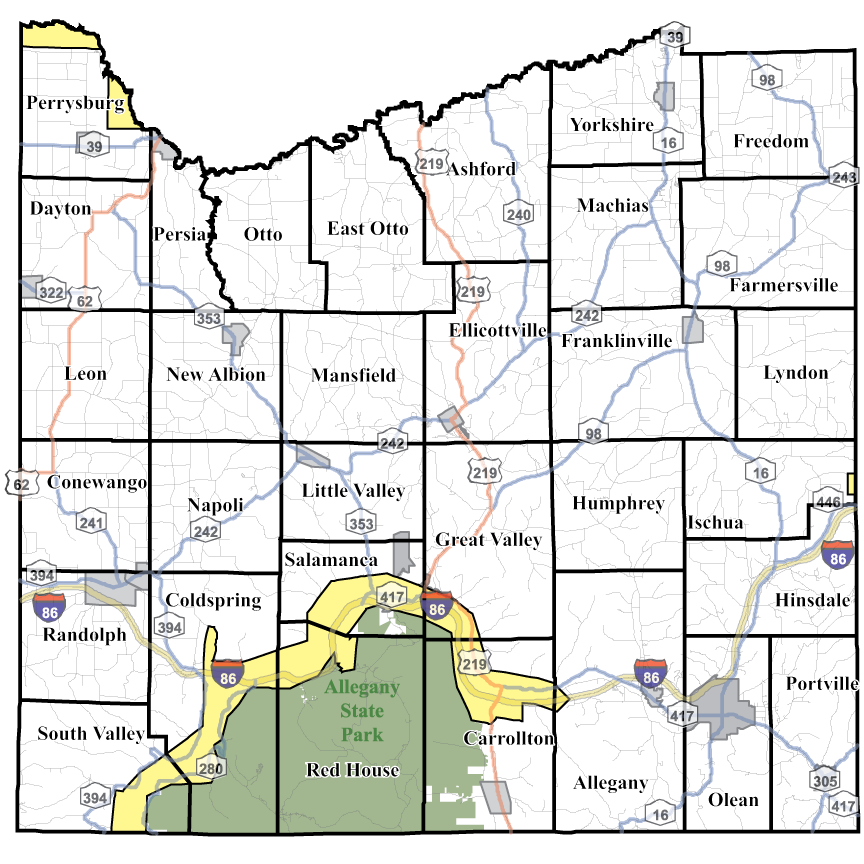
Cattaraugus County lies within the Appalachian Plateau, a region defined by rolling uplands and deeply incised river valleys. The terrain is predominantly rural, with extensive forests and agricultural land.
Major geographic features include:
- The Allegheny River, which flows southward into Pennsylvania.
- Cattaraugus Creek, forming part of the county’s northern boundary.
- Allegany State Park, one of the largest state parks in New York.
The climate is humid continental, marked by cold winters with significant snowfall and warm summers.
The county covers approximately 1,300 square miles, making it one of the larger counties in New York by area.
🏛️ Historical Development
Cattaraugus County was formed from portions of Genesee County in 1808. Its name derives from a Seneca word often interpreted to mean “bad smelling banks,” possibly referring to natural gas seeps along waterways.
Early settlement in the nineteenth century was driven by logging and agriculture. Timber from the region’s forests supported construction and industry in growing northeastern cities. By the mid-nineteenth century, railroads facilitated expansion and integration into broader markets.
The discovery of oil in nearby regions during the late 1800s stimulated refining and transport industries, particularly around Olean. Manufacturing and small-scale industry became central to the county’s economy in the late nineteenth and early twentieth centuries.
Like many rural counties in the northeastern United States, Cattaraugus experienced economic shifts during the twentieth century as heavy industry declined and agricultural practices modernized.
🪶 Indigenous Presence
A significant portion of the county includes territory of the Seneca Nation of Indians, part of the Haudenosaunee (Iroquois Confederacy). The Allegany Indian Reservation lies within the county’s borders.
The Seneca people have inhabited this region for centuries, long before European settlement. Treaties in the late eighteenth and nineteenth centuries shaped the current boundaries of reservation lands.
Today, the Seneca Nation operates governmental, economic, and cultural institutions within the county, maintaining a distinct political and cultural identity.
🏙️ Municipalities and Communities
Cattaraugus County contains a mix of cities, towns, and villages.
- Olean is the largest city and serves as a commercial and healthcare hub.
- Salamanca is located within the Allegany Reservation and has unique land-leasing arrangements involving the Seneca Nation.
- Little Valley functions as the county seat.
Most other communities are small towns and villages, reflecting the county’s predominantly rural character.
🌾 Economy
Historically centered on logging, oil refining, and manufacturing, the county’s economy has diversified. Major sectors today include:
- Healthcare and social services
- Education
- Tourism and recreation
- Light manufacturing
- Agriculture
Allegany State Park and outdoor recreation attract visitors, contributing to seasonal economic activity. The presence of St. Bonaventure University near Olean also influences the regional economy.
🚗 Transportation
Transportation infrastructure includes state highways connecting the county to Buffalo, Jamestown, and Pennsylvania communities. Rail freight remains active in certain corridors, reflecting the region’s industrial heritage.
Due to its rural geography, personal vehicle transportation remains the dominant mode of travel.
👥 Demographics
Cattaraugus County has a relatively low population density compared to more urbanized counties in New York State. Population trends reflect broader patterns in rural America, including modest decline or stagnation in certain periods due to economic restructuring and migration to metropolitan areas.
The county’s demographic composition includes both non-Indigenous residents and members of the Seneca Nation, contributing to its cultural diversity.
🌲 Environment and Recreation
Natural landscapes define much of the county’s identity. Forested hills, rivers, and state parklands support activities such as:
- Hiking
- Camping
- Hunting and fishing
- Winter sports
Environmental conservation plays an important role in land management, particularly within protected state and reservation lands.
Last Updated on 2 months ago by pinc